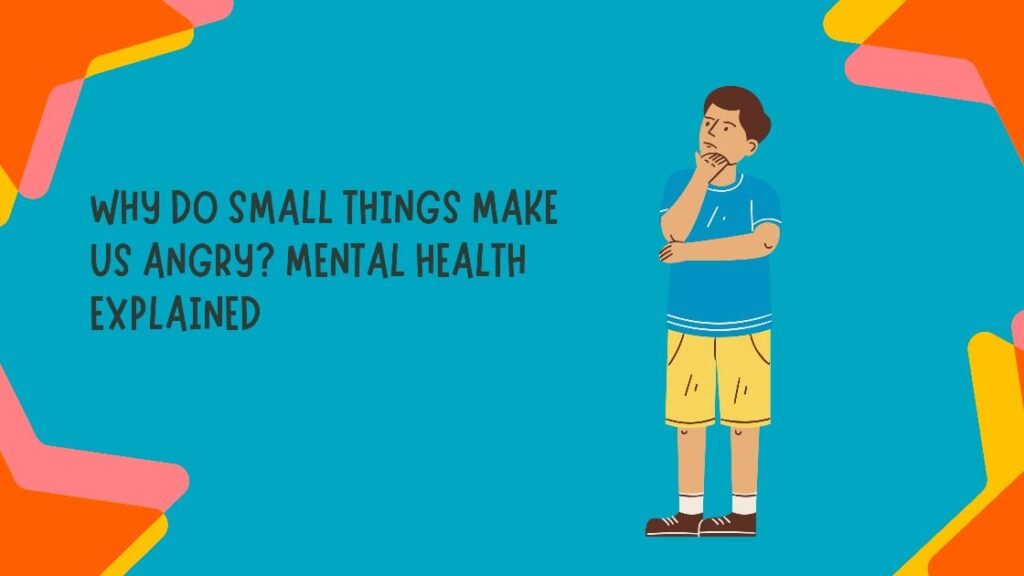
Have you ever noticed that sometimes very small things—like slow internet, a minor mistake, or someone’s comment—can suddenly make you angry? Even though the situation is not serious, the reaction feels intense. This is not a character flaw. Psychology and mental health explain this behavior very clearly.
Let’s explore why small things trigger anger, what is happening inside the mind, and how you can manage it in a healthy way.
Why Small Things Trigger Big Anger
1. Emotional Overload
Anger is often not about the small issue itself. It is usually the final drop in an already full emotional cup.
When a person is dealing with:
- Stress
- Pressure
- Unresolved emotions
- Mental exhaustion
Even a tiny problem can trigger a strong emotional reaction.
2. Suppressed Emotions Build Pressure
Many people suppress anger, sadness, or frustration to “stay calm” or avoid conflict. Over time, these emotions build up internally.
Small triggers release this stored pressure, similar to a balloon bursting after being overfilled.
3. Mental Fatigue Reduces Self-Control
When the brain is tired, it struggles to regulate emotions. Mental exhaustion reduces patience and tolerance.
This is why anger increases:
- After long workdays
- During lack of sleep
- In emotionally demanding situations
4. Stress Hormones and the Brain
Chronic stress keeps cortisol levels high. High cortisol makes the brain alert and reactive rather than calm and logical.
As a result:
- Small problems feel threatening
- Emotional reactions become faster
- Rational thinking decreases
5. Feeling Unheard or Unvalued
Anger can appear when a person feels:
- Ignored
- Disrespected
- Unappreciated
Small events then act as reminders of deeper emotional needs that are not being met.
Is Getting Angry Easily a Mental Health Issue?
Occasional anger is normal. However, frequent irritation over small things can be a sign of:
- Chronic stress
- Anxiety
- Depression
- Burnout
Anger is often a secondary emotion hiding deeper emotional pain.
Effects of Frequent Anger on Health
Uncontrolled anger can impact both mental and physical health:
- Increased blood pressure
- Headaches
- Poor sleep
- Relationship problems
- Constant emotional tension
Learning to manage anger is important for overall well-being.
How to Control Anger Over Small Things
1. Pause Before Reacting
Take a few seconds before responding. This pause allows the brain’s logical part to take control.
2. Identify the Real Cause
Ask yourself:
- Am I tired?
- Am I stressed?
- Is something else bothering me?
Understanding the root reduces emotional intensity.
3. Improve Sleep and Rest
Poor sleep lowers emotional tolerance. Prioritizing rest improves emotional balance naturally.
4. Practice Calm Breathing
Slow breathing sends a signal of safety to the nervous system and reduces emotional reactions.
5. Express Emotions Regularly
Healthy emotional expression—through talking, writing, or reflection—prevents emotional buildup.
When to Seek Professional Help
If anger:
- Feels uncontrollable
- Causes regret
- Damages relationships
- Affects daily functioning
Then mental health support can make a positive difference.
Final Thoughts
Getting angry over small things does not mean you are weak or bad. It means your mind and emotions need care. When you understand your emotional triggers, you gain control instead of reacting automatically. Anger is not the enemy—unmanaged stress is.
About the Author