Discover the best high protein foods to boost muscle, support weight loss, and improve overall health. A complete, easy-to-follow protein food guide.
High Protein Foods: Why They Matter for Your Body
Protein is one of the most important nutrients your body needs every day. It helps build muscles, repair tissues, support immunity, and keep you feeling full for longer. Whether your goal is weight loss, muscle gain, or simply better health, including high protein foods in your daily diet can make a huge difference.
In this blog, we’ll explore the best high protein foods, their benefits, and simple ways to add them to your meals—naturally and sustainably.
Benefits of Eating High Protein Foods
Eating enough protein offers many health advantages:
- Helps build and maintain lean muscle
- Supports healthy weight loss by reducing hunger
- Boosts metabolism and energy levels
- Strengthens bones, skin, hair, and nails
- Aids faster recovery after illness or exercise
Best High Protein Foods to Include in Your Diet
1. Eggs
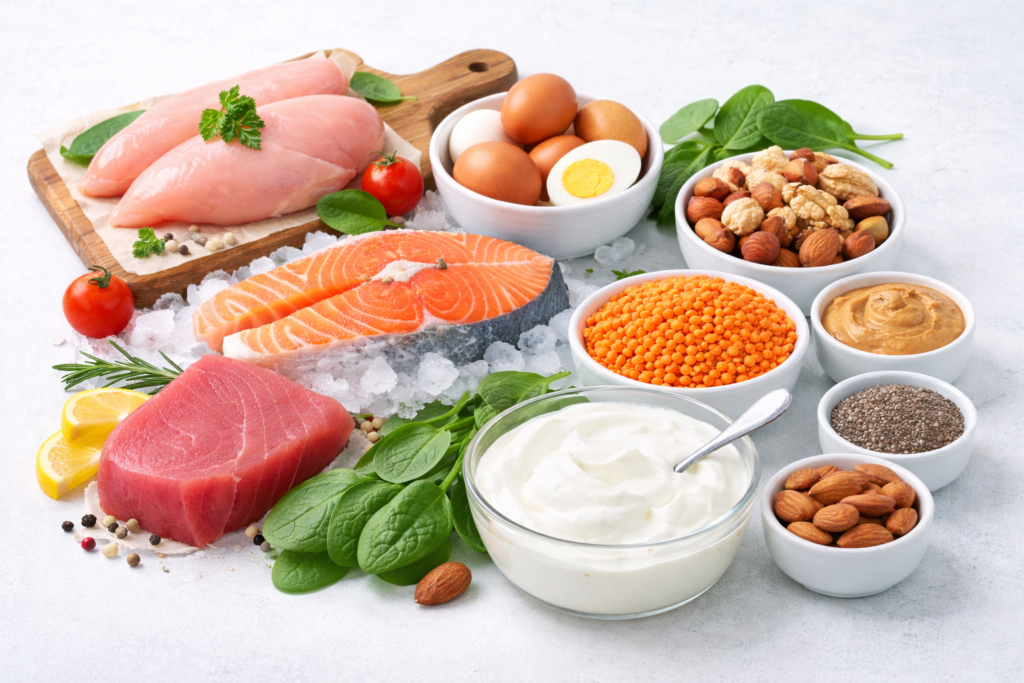
Eggs are one of the most affordable and complete sources of protein. They contain essential amino acids and are perfect for breakfast, lunch, or dinner.
How to eat: Boiled eggs, omelets, scrambled eggs, or egg sandwiches.
2. Chicken Breast
Chicken breast is a lean protein powerhouse with low fat content. It’s especially popular among fitness lovers.
How to eat: Grilled chicken, chicken salad, wraps, or stir-fries.
3. Fish
Fish like tuna, salmon, and mackerel are rich in protein and healthy omega-3 fats that support heart and brain health.
How to eat: Grilled, baked, or lightly pan-fried fish with vegetables.
4. Lentils and Beans
For vegetarians, lentils, chickpeas, and kidney beans are excellent plant-based protein sources. They’re also high in fiber, which improves digestion.
How to eat: Daal, bean curries, soups, or salads.
5. Greek Yogurt
Greek yogurt contains more protein than regular yogurt and supports gut health.
How to eat: With fruits, nuts, honey, or as a smoothie base.
6. Nuts and Seeds
Almonds, peanuts, chia seeds, and pumpkin seeds provide protein along with healthy fats.
How to eat: As snacks, toppings for yogurt, or added to smoothies.
7. Cottage Cheese
Cottage cheese is low in fat and high in protein, making it ideal for weight management.
How to eat: With fruits, black pepper, or in sandwiches.
How Much Protein Do You Need Daily?
Protein needs vary depending on age, activity level, and health goals. On average:
- Adults need about 0.8–1 gram of protein per kg of body weight
- Active people and athletes may need more
Always balance protein with carbohydrates, healthy fats, and vegetables for a complete diet.
Simple Tips to Add More Protein to Your Diet
- Start your day with a protein-rich breakfast
- Add lentils or beans to rice and curries
- Snack on nuts instead of sugary foods
- Include a protein source in every meal
- Avoid relying only on supplements—natural foods are best
Conclusion
High protein foods are essential for a strong, healthy, and energetic life. Whether you choose animal-based or plant-based options, consistency is key. Small daily changes—like adding eggs, lentils, or yogurt to your meals—can lead to long-term health benefits.
Start today, eat smart, and let protein power your health naturally 💪🥗
About the Author